KNX in super-prime residential: what the client never sees
Why super-prime clients get a level of control, redundancy, and discretion from an integrator-led KNX system that a productised install cannot deliver.
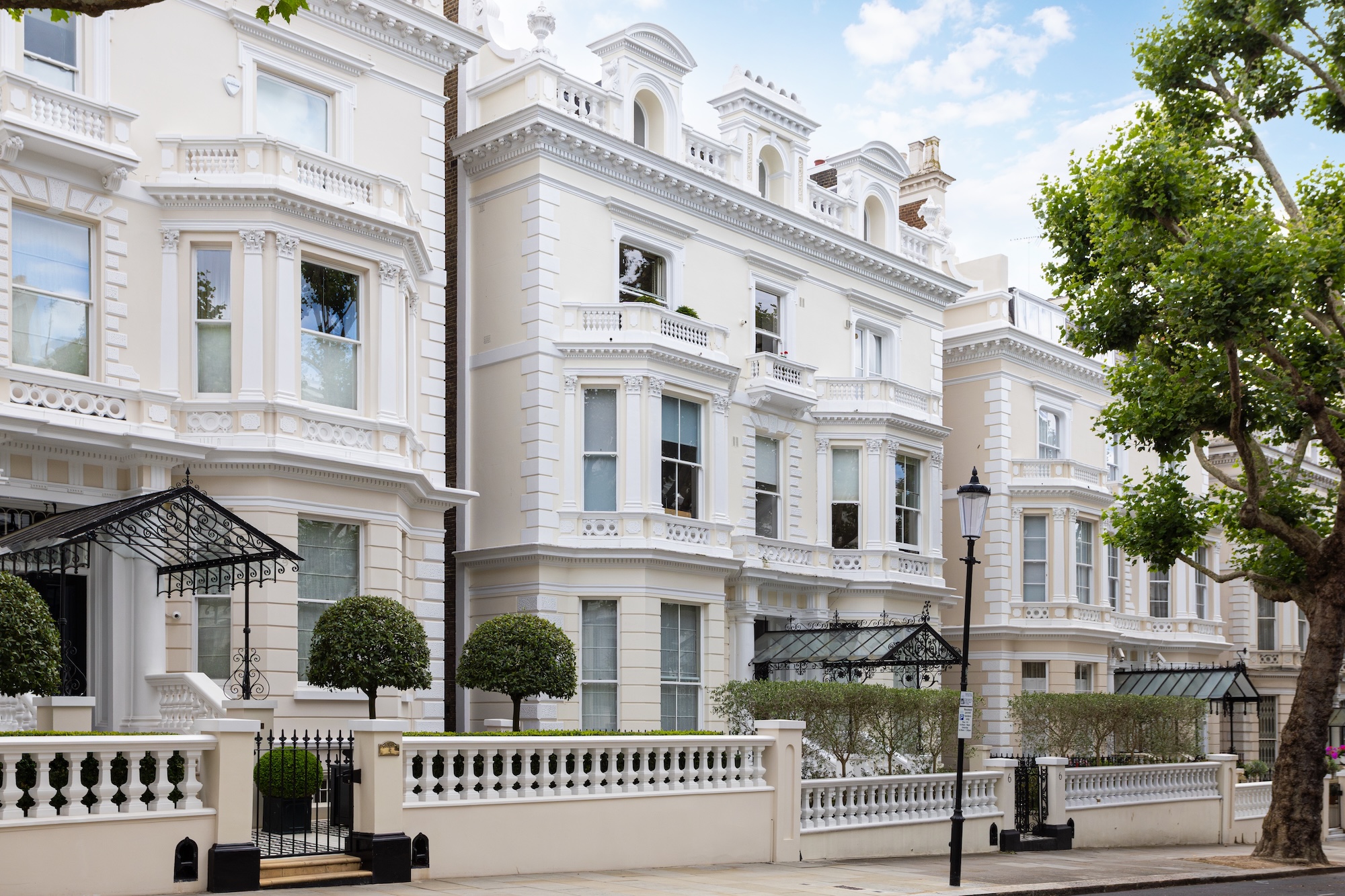
In a super-prime residence, the automation should disappear. The client walks into a house that lights itself before dawn without a switch being pressed, holds temperature and shading through the day, and stages sound and video across rooms without a remote in view. What sits behind that experience is a KNX system designed and engineered by an integrator.
This post walks through what a super-prime client expects from home automation, the layers of the system that produce that experience, and why the integrator is the specification decision that makes the difference.
The super-prime expectation
Super-prime clients do not buy features. They commission a house, and they expect the house to work.
That expectation includes the automation. Lighting scenes suited to the time of day and the room’s use. Climate that holds without adjustment. Blinds that respond to sun and privacy without being controlled. Music, video, and cinema across the house without a remote on the coffee table. Staff and housekeeping support that runs quietly in the background. Security that arms without shouting about itself.
None of that comes from a product. It comes from a system that has been designed around the client’s brief, the architecture, the interior scheme, and the way the household actually runs. That is the work an integrator does.
Circadian and scene lighting
Lighting is where the automation is most visible in a super-prime home, and where the design coordination is most demanding.
A KNX system carries the lighting design across two axes:
- Scene-based control for time of day, activity, and mood, coordinated with the lighting designer’s scheme
- Circadian control that tunes colour temperature and intensity through the day, aligned with natural light patterns
The system speaks to the appropriate driver protocol (DALI is common in super-prime schemes, DMX for architectural feature lighting, KNX-native for direct-controlled circuits) with the coordination handled centrally. Warm-dim behaviour, tunable-white transitions, and low-level night circuits are held by the system across every room they touch.
The wall interfaces are quiet. Custom-finish keypads or subtle capacitive plates chosen by the interior designer replace the visible clutter of dimmer switches. The client sees the light. The control sits quietly in the room.
Multi-room AV, coordinated through KNX
Super-prime homes typically run distributed audio, distributed video, and one or more cinemas. The AV specialist is a separate discipline from the KNX integrator, and the two need to work together.
KNX carries the room-level control. AV sources, matrices, and processors sit in dedicated racks, hidden away, feeding endpoints across the house. The client raises a keypad, taps a phone, or asks a voice control endpoint for music in the kitchen and cinema in the family room, and the KNX system routes the request to the AV system, sets the lighting scene, and closes the blinds if the scene calls for it.
The AV specialist owns the AV. Baulogic Bespoke delivers the coordination layer that makes AV, lighting, blinds, and climate behave as one system when the client asks for them together.
Blinds and climate coordination
Blinds and shading in a super-prime home are rarely just window coverings. They handle solar gain, glare, privacy, and the appearance of the elevation from outside. The KNX system runs them against:
- Sun position and orientation, so blinds respond to actual solar loading
- Time-of-day scenes, so the house presents differently from morning to evening
- Occupancy patterns, so unused rooms revert to a default position
- Manual overrides that hold cleanly and then rejoin the schedule
Climate is coordinated in the same layer. Underfloor heating, comfort cooling, ventilation, and where relevant humidity and specialist plant (wine, spa, pool) all run under KNX control, zoned to the way the household uses the house. Bedrooms warm before the client wakes. The gym adjusts for the morning. Reception rooms hold steady through the evening.
Where the blinds close for solar gain and the climate steps down to match, that is one integrated response across systems.
Staff and security interfaces
Super-prime homes are staffed, whether by a full-time housekeeper, a rotating team, or contractors on schedule. The automation needs to support them without being visible to the principal client.
KNX provides:
- Staff dashboards for housekeeping, turndown, and back-of-house routines
- Time-limited access codes for contractors and service visits
- Integration with the security system (CCTV, intrusion, access control)
- Discreet arming indicators that visitors do not see or hear
- Panic and duress responses coordinated across lighting, doors, and communications
The security consultant defines the security policy. The KNX integrator makes sure the house behaves the way that policy requires without imposing on the client experience.
Silent reliability
The attribute super-prime clients value most in an automation system is the one they cannot see: it works, and when something goes wrong, they rarely find out.
Silent reliability is a design outcome. It comes from:
- A hardwired KNX backbone that does not depend on wireless conditions in the house
- Redundancy in critical paths (lighting circuits, climate zones, security)
- Battery-backed bus operation through short power interruptions
- Monitoring that reports faults to the integrator or to a household technician, not to the client
- Documented recovery procedures for the systems that sit above KNX (AV, network, storage)
When a bulb fails, an alert reaches whoever is responsible for replacing it. When a blind motor stops responding, the system logs it and flags the maintenance visit. The client sees a house that works.
The case for the integrator
Super-prime automation is a designed system that reflects a specific house, a specific client, and a specific way of running the household. That level of coordination requires an integrator inside the design team, working with the architect, the interior designer, the lighting designer, the AV specialist, the security consultant, and the household staff.
An integrator-led KNX engagement delivers:
- Design coordination from concept through to handover
- Documentation issued through the M&E consultant in formats the rest of the design team can use
- Programming shaped around how the client actually uses the house
- Commissioning by the same team that designed the system
- Aftercare and long-term support with one accountability line
Productised systems are built to a repeatable specification. They serve their audience well. In a super-prime residence, the specification is one of a kind, and the delivery has to be shaped to fit.
What to specify at brief stage
For an architect, interior designer, or private client briefing an automation scope on a super-prime project, the practical points:
- KNX as the protocol, chosen for openness, longevity, and integration reach
- Integrator appointed at RIBA Stage 2, inside the design team
- Coordination scope that covers lighting, climate, blinds, AV, security, staff interfaces, and specialist plant
- Long-term support written into the engagement at proposal stage
- Documentation issued through the M&E consultant in the design team’s formats
The client’s experience of the house is set by hundreds of small decisions taken across the project. The automation, done properly, holds those decisions together and lets the house work the way it was designed to.