KNX for padel facilities: one system across lighting, climate, access, and audio
Why a multi-court padel facility runs better when lighting, climate, access, audio, and energy sit on a single KNX system, integrated with court booking and the operator's platform.
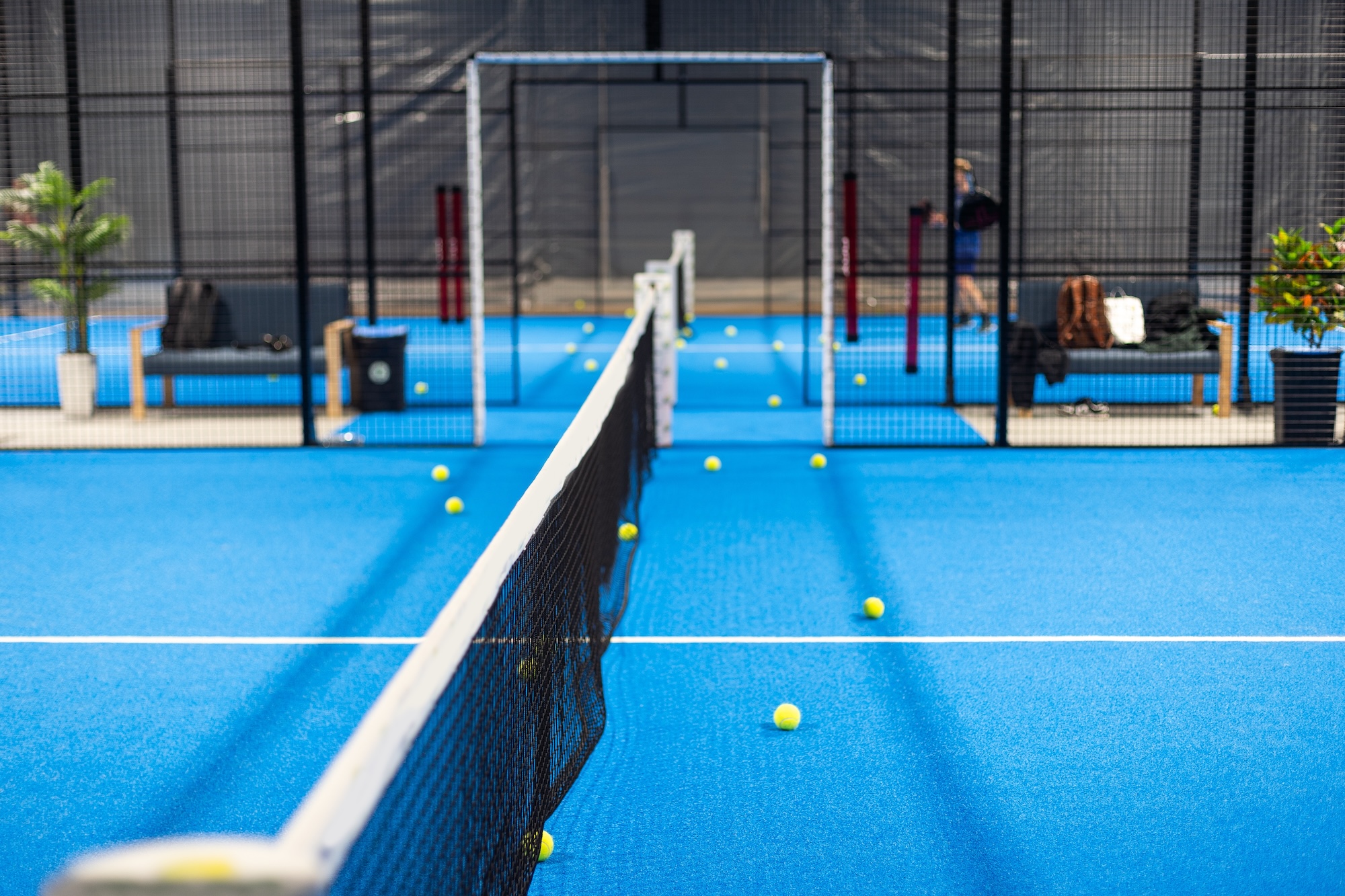
On a multi-court padel facility, court lighting, climate, access control, and audio sit on one KNX system. So do energy management, booking integration, and the operator’s reporting platform. For an operator running multiple courts, multiple zones, and tight margins per booking, that consolidation matters.
This post walks through what a KNX system manages in a padel facility, how it integrates with the booking platform, and why a multi-site operator benefits from specifying KNX once across the portfolio.
The operational picture
A typical multi-court padel facility runs 4 to 12 courts, indoor or outdoor or both, plus viewing areas, F&B, changing rooms, reception, a pro shop, and back-of-house. Each area has different requirements for lighting, climate, audio, and access. Each one runs on a booking-led schedule that varies by hour, by day, and by season.
The systems that have to coordinate:
- Court lighting (energy-heavy, scheduled by booking)
- Climate across indoor courts and supporting spaces
- Access control for members, staff, and contractors
- Audio across F&B, viewing, and player areas
- Energy sub-metering and reporting
- Integration with the court booking platform
A single KNX specification carries all of these layers on one open-standard backbone, with documented interfaces between systems. The operator deals with one specification, one supplier model, and one set of integration points across the operational stack.
Court lighting
Court lighting is the biggest single energy load in a padel facility. LED courts typically draw 8 to 12 kW per court at full output. A facility with 8 courts running an evening peak can be pulling close to 100 kW on lighting alone, before HVAC and supporting spaces are counted.
KNX manages court lighting against the booking schedule:
- Lights come up to play level shortly before a booking starts
- Lights drop to a lower idle level between bookings on the same court
- Lights switch off when no further booking is scheduled within a defined window
- Tournament and event scenes lift output and override the schedule for the duration
Dimming is consistent across the facility. A booking on Court 1 produces the same light level as a booking on Court 7. The system holds the lighting designer’s intent across every court and every booking.
Climate by zone
Indoor padel facilities have meaningful HVAC requirements. Players generate heat. Buildings need ventilation and cooling during peak periods and heating in winter. Spectator, F&B, and changing areas have different setpoints from the courts themselves.
KNX coordinates climate by zone, working with the BMS:
- Court HVAC ramps up ahead of a booking and scales back when courts are idle
- F&B holds steady operator setpoints through trading hours
- Changing rooms run baseline temperature with extract responding to occupancy
- Plant rooms and back-of-house run on their own schedule
Where the facility uses heat recovery, demand response, or off-peak optimisation, KNX provides the control layer that ties booking schedules to plant operation.
Access control tied to booking
A padel facility runs early in the morning, late at night, and through weekends. Many operators run unstaffed hours. The access system has to know who is allowed where, and when.
KNX integrates with the access control platform to:
- Open the front door for members within their booking window
- Release individual court access when a booking begins
- Hold back-of-house doors locked outside staff hours
- Allow contractor access against pre-booked windows
- Lock down the facility outside operating hours
Where the operator runs different access policies in different zones (members-only courts, coaching-only periods, private hire), KNX applies them by zone and by time without staff intervention.
Audio across zones
F&B, viewing, and player areas typically run different audio content at different volumes. KNX manages zoning, volume, and source selection, coordinated with whichever audio service the operator runs (Soundtrack Your Brand, Spotify Business, or similar).
The system applies preset levels through the day. F&B runs at conversation level during quiet hours and lifts at peak. Viewing areas hold a different mix. Players hear court-side audio at sport-appropriate level. The operator sets the rules once.
Energy management and reporting
Padel operators carry meaningful energy bills, particularly on lighting and HVAC. Sub-metering through the KNX system, fed into the operator’s energy platform, gives:
- Energy per court, per hour, per booking
- Energy per zone for F&B, changing, and back-of-house
- Demand response participation where available
- Reporting for ESG, business rates, and lease obligations
The data lives in the operator’s reporting stack. KNX is the source layer that feeds it.
Integration with court booking and operator platforms
This is the integration that ties everything together. KNX connects to the court booking platform (Playtomic, Matchi, Skedda, or the operator’s own system) so that:
- A new booking triggers a lighting, climate, and access sequence on the relevant court
- A cancellation rolls the schedule back
- The operator’s CRM sees usage data alongside booking data
- The maintenance team sees equipment status alongside operational data
- The operator runs the facility from a single dashboard
Integration is over APIs or webhooks, designed at implementation stage to match the platforms the operator has chosen.
Why one system across the stack matters at scale
For an operator running a single facility, KNX consolidates the operational layer onto one protocol. For an operator running a portfolio of facilities, that consolidation compounds.
The same KNX specification rolls out to the next facility. The training programme transfers. Spares are common. Maintenance contracts extend across all sites in the portfolio. When a new facility joins the operator’s estate, it adopts the existing standard.
For a commercial operator planning more than one site, the time to set the standard is at the design of the first facility.
What to specify
For a developer or operator briefing a new padel facility, the practical specification points:
- KNX as the protocol, designed in from RIBA Stage 2
- Integration matrix that includes the court booking platform, the audio service, the BMS, and the access control system
- Sub-metering specified to the zone and court level
- Operator dashboard and reporting requirements set before commissioning
- Maintenance and aftercare written into the engagement at proposal stage
A padel facility specified this way runs leaner, scales across sites, and gives the operator a system that holds up across the operating lifecycle of the building.